
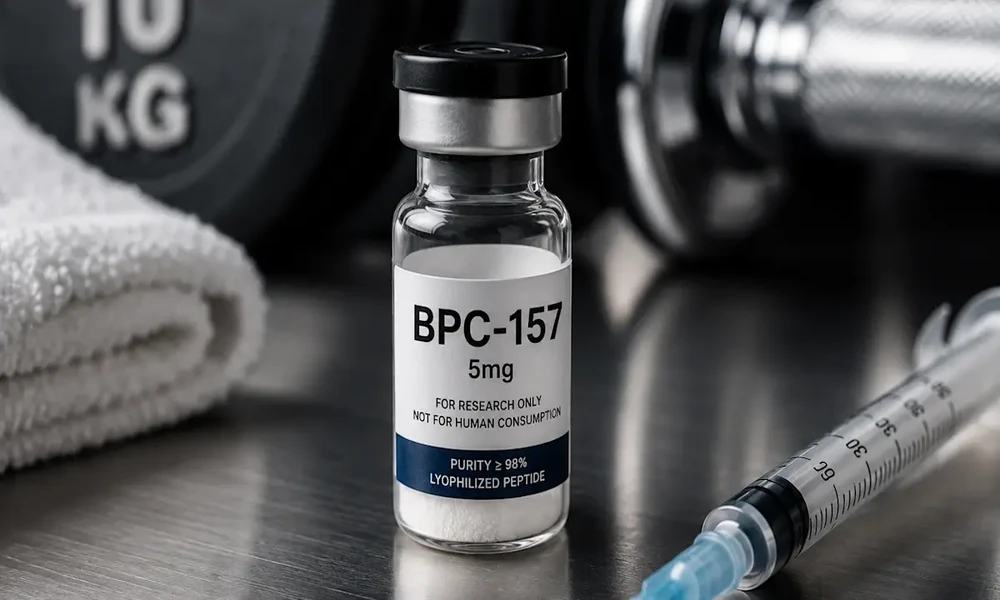
BPC 157 is a peptide that originates from proteins found in gastric juices. This compound consists of approximately 15 amino acids and has gained attention in scientific circles. Its potential to influence healing processes makes it a topic of significant interest.
Ongoing investigations are examining how this peptide may facilitate recovery in various biological models. The complexity of its mechanisms is crucial for understanding its future applications in medicine. Current studies aim to clarify its role in biological systems, highlighting its potential benefits.
This article aims to provide a comprehensive overview of the current state of BPC 157, including its implications for healing. By delving into the latest findings, readers can gain valuable insights into this fascinating area of research.
Key Takeaways
- BPC 157 is a peptide derived from gastric juices.
- It consists of around 15 amino acids.
- Current studies focus on its role in healing processes.
- Research aims to clarify its potential medical applications.
- Understanding its mechanisms is essential for future use.
Introduction to BPC-157 for Tissue Repair Research
BPC 157, a peptide sourced from gastric proteins, has garnered significant attention. This compound, consisting of around 15 amino acids, plays a vital role in the body’s healing processes. Its potential to accelerate recovery from injuries is particularly noteworthy.
Historically, BPC 157 was identified as a stable gastric pentadecapeptide. Its effects on muscle, tendon, and ligament healing have made it a focus of various studies. While most research has been conducted on small rodent models, the implications for human applications remain promising.
Understanding the mechanisms behind this peptide is essential for those considering its use in therapy. As more studies emerge, the potential of BPC 157 in promoting recovery and healing continues to unfold.
Understanding the Mechanism of BPC-157
Emerging from the proteins in gastric fluids, this peptide has shown promise in promoting recovery. One of its key characteristics is its stability, allowing it to remain active in the human gastric environment for over 24 hours. This stability is crucial for its effectiveness as a stable gastric pentadecapeptide.
The mechanism of action involves activating repair cells and enhancing the sensitivity of growth factor receptors within tissues. Research indicates that this peptide interacts with various biological pathways, contributing to the maintenance of the gastrointestinal tract’s integrity.
Additionally, it influences collagen synthesis and aids in the formation of blood vessels in damaged areas. By mediating cytoprotection, this peptide demonstrates a balanced modulatory action that is central to its potential healing effects.
Ongoing studies are investigating how it interacts with growth factors to support healing in tendons and ligaments, highlighting its multifaceted role in recovery.
Evidence from Preclinical Studies
This peptide, known for its origins in gastric proteins, has been a focal point in healing studies. Numerous preclinical investigations have explored its effects, particularly in animal models. A comprehensive literature review indicates that all studies involving this peptide have consistently shown positive outcomes in rodent models.
Research conducted by Sikiric et al. has documented its impact on various models. Notably, studies reveal that this peptide promotes the maturation of granulation tissue and enhances collagen organisation in diabetic rat models. Furthermore, it has been tested in diverse wound healing scenarios, including incisional skin wounds and synthetic sponge implants.
Additionally, preclinical findings suggest that this peptide can counteract burn stress-induced gastric lesions in mice. Its administration has also been linked to improved recovery outcomes in major vessel occlusion models. The ability to stimulate blood vessel formation is a significant highlight of many preclinical studies.
| Study Type | Model Used | Key Findings |
|---|---|---|
| Wound Healing | Diabetic Rats | Promotes granulation tissue maturation |
| Skin Wounds | Incisional Wounds | Enhances collagen organisation |
| Gastric Lesions | Mice | Counteracts burn stress-induced lesions |
| Vessel Occlusion | Animal Models | Improves recovery outcomes |
BPC-157 for Tissue Repair Research: In-Depth Analysis
The peptide in question has gained recognition for its unique properties derived from gastric proteins. Recent studies highlight its role in activating the egr-1 gene and its co-repressor, nab2, which are essential in healing processes.
This compound’s ability to promote collagen deposition is closely linked to the ERK1/2 signalling pathway and downstream targets like c-Fos. Notably, research suggests that it may outperform standard angiogenic growth factors under specific experimental conditions.
BPC 157 therapy has demonstrated significant effects, including accelerated re-epithelialisation and dermal remodelling in various skin wound models. Furthermore, its potential antioxidant properties, attributed to carboxylic groups, enable it to neutralise free radicals effectively.
Researchers are also examining how this peptide maintains a delicate balance between necrosis and fibroblast activation. The ongoing exploration of its mechanisms reinforces its position as a stable gastric pentadecapeptide in regenerative science.
| Mechanism | Key Effects | Significance |
|---|---|---|
| Gene Activation | Enhances healing | Supports tissue recovery |
| Collagen Promotion | Improves wound healing | Strengthens tissue structure |
| Antioxidant Activity | Inactivates free radicals | Reduces oxidative stress |
| Fibroblast Regulation | Balances necrosis | Optimises healing response |
Clinical Applications and Research Insights
The peptide known as BPC 157 has captured the interest of the medical community due to its unique properties. This compound is often administered through intramuscular injection, although some studies suggest it may also be effective when taken orally.
Clinical trials have explored its potential in treating conditions like multiple sclerosis and ulcerative colitis. Comparisons with established angiogenic growth factors, such as VEGF and bFGF, have highlighted its distinct advantages.
Dosing protocols vary across studies, with researchers generally using consistent dose ranges tailored to different injury types. While the peptide is praised for its healing properties, its efficacy in human clinical trials remains to be fully established.
| Study Focus | Administration Route | Key Findings |
|---|---|---|
| Multiple Sclerosis | Intramuscular | Potential therapeutic effects observed |
| Ulcerative Colitis | Oral | Encouraging results in early trials |
| Wound Healing | Intramuscular | Enhanced recovery compared to traditional therapies |
Evaluating Injury Recovery and Tissue Regeneration
Recognised for its unique biochemical structure, this peptide plays a crucial role in enhancing recovery. Studies indicate that it significantly improves ligament healing in rat models, as documented in the Journal of Orthopaedic Research.
This compound enhances the expression of growth hormone receptors in tendon fibroblasts, which aids in the repair of soft tissues. Additionally, it promotes the maturation of granulation tissue in both skin and colon anastomoses.
The ability of this peptide to accelerate recovery in muscle and tendon injuries is a primary focus of regenerative orthopaedics. Notably, researchers have observed that it can facilitate the healing of concomitant lesions, such as burn stress-induced gastric damage.
The balanced modulatory action of this peptide is essential for the regeneration of tissues following traumatic injury. In fact, studies have shown that therapy with this compound can significantly increase the tensile breaking strength of burned skin.
Moreover, its role in activating collateral pathways during vessel occlusion contributes to its overall regenerative potential.
Safety Profile: Legality, Regulation, and Clinical Trials
A notable compound in the healing landscape, this peptide has shown potential across several studies. However, its legal status and safety profile raise important questions. In the United Kingdom, the unregulated sale of performance-enhancing peptides has led to scrutiny.
The USADA and WADA banned this peptide as of January 1, 2022, due to insufficient research and safety concerns. The FDA has also issued advisories against its use in compounded medications. There is currently no legal basis for selling this peptide as a drug, food, or dietary supplement in the United States.
Clinical trial data involving this peptide in humans is limited, making it challenging to establish a definitive safety profile. Researchers note that the lack of human trials complicates the assessment of its potential effects. Many products are sold for “research only” purposes, which bypasses standard regulatory oversight.
| Regulatory Body | Action Taken | Reason |
|---|---|---|
| USADA/WADA | Banned | Insufficient research |
| FDA | Issued advisories | Safety concerns |
| UK Regulatory Authorities | Scrutiny | Unregulated sales |
Comparative Studies & Alternative Therapies
The peptide derived from gastric proteins has been a subject of intense scrutiny in healing studies. Often, it is compared to established growth factors such as VEGF, bFGF, and EGF in the context of wound healing.
Unlike PDGF-BB, this peptide has shown a remarkable ability to promote mature collagen in granulation tissue, particularly in diabetic wound models. Research by Sikiric et al. has demonstrated that it exhibits an angiogenic effect that surpasses that of standard antiulcer agents.
Notably, this peptide remains stable in human gastric juice, which distinguishes it from many other growth factors that necessitate complex delivery systems. Comparative studies indicate that it does not require additional carriers, a factor that often hinders the activity of other peptides.
Furthermore, its ability to activate collateral pathways during vessel occlusion represents a significant advancement in comparative research. Researchers have observed that therapy with this peptide provides a more consistent healing effect than systemic corticosteroids in burn models.
Importance of Dosage and Administration
The peptide, derived from gastric fluids, plays a significant role in the healing process. Research indicates that it maintains beneficial activity across the same dose range, regardless of the injury type. This consistency is vital for effective therapy.
Typically, this peptide is administered via injection. However, studies have noted positive effects when given orally in certain models. Determining the optimal dosage is crucial for understanding its mechanisms in various tissue repair scenarios.
The stability of this peptide in gastric juice allows for consistent administration protocols. Studies have shown that similar routes of application can be effective for different types of injuries. Proper administration ensures that the peptide reaches target tissues effectively during recovery.
Researchers continue to refine dosage guidelines to better understand the therapeutic potential of this stable gastric pentadecapeptide. The consistency of its effects across different doses is a key feature that supports its use in clinical settings.
Innovations in Delivery Methods
This unique peptide, originating from gastric fluids, has shown potential in enhancing recovery. Innovations in delivery methods are crucial for improving the efficacy of growth factors. Although this peptide often functions well without carriers, researchers are exploring novel carriers to enhance sustained release in tissue repair applications.
The stability of this peptide in human gastric juice offers a significant advantage over other growth factors, which typically require complex delivery systems. Studies frequently compare this peptide to others that need sophisticated carriers to maintain their activity. The development of new delivery routes is a priority for scientists aiming to optimise its regenerative potential.
Research into sustained release systems for this peptide could lead to more effective treatments for chronic injuries. Its ability to function without additional carriers simplifies the development of new delivery methods. Scientists are also investigating how different carriers might influence the healing effects of this peptide in various experimental models.
Interpreting the Current Research Landscape
This unique peptide, derived from gastric fluids, has emerged as a subject of considerable interest in the healing domain. A critical analysis of recent trials reveals that while this compound shows promise, human efficacy remains unconfirmed by rigorous data.
Researchers emphasise the need for more robust clinical trials to validate the findings observed in animal models. The current research landscape is characterised by a mix of preclinical success and a lack of human clinical evidence.
Studies published by Sikiric et al. (1993-2020) form the foundation of the current understanding of this peptide’s healing properties. The article highlights the importance of interpreting research findings with caution, especially regarding the peptide’s potential in humans.
Ongoing research continues to explore its role in regenerative medicine and recovery. Scientists are working to address the limitations of current studies, such as the reliance on small rodent models. The interpretation of this peptide’s research requires a balanced view of both the positive preclinical outcomes and the regulatory challenges.
Industry Perspectives: Insights from Pure Peptides UK
Insights from Pure Peptides UK reveal the growing enthusiasm surrounding the potential of BPC 157. This peptide has become a focal point within both research and wellness communities. Experts at Pure Peptides UK collaborate with researchers to explore future trends in peptide applications, particularly in regenerative medicine.
Pure Peptides offers a diverse range of compounds for research purposes, significantly contributing to the understanding of peptide-based healing. The team at Pure Peptides emphasises the importance of rigorous scientific standards in the study of BPC 157 and other peptides.
Industry perspectives from Pure Peptides UK highlight the necessity for continued investment in peptide research and development. Collaborations between research institutions and companies like Pure Peptides are vital for advancing the field of regenerative science.
Future trends in peptide research suggest a shift towards more targeted therapies for injury recovery. The focus on BPC 157 reflects the ongoing search for effective, stable, and reliable therapeutic agents.
“Continued collaboration is essential for the advancement of peptide applications in healing.”
Pure Peptides UK
| Focus Area | Contribution | Future Direction |
|---|---|---|
| Research | Understanding peptide effects | Targeted therapies |
| Wellness | Promoting healing | Enhanced applications |
| Collaboration | Industry partnerships | Innovation in therapy |
Emerging Trends from Global Research Communities
Emerging studies from various research communities are shedding light on the therapeutic potential of a specific peptide. Global research efforts are integrating bioinformatics to better understand the complex pathways influenced by this peptide. These advancements are crucial for enhancing the healing process.
Integration of New Technologies in Tissue Repair
New technologies are being applied to study the effects of this peptide in larger animal models. This approach helps researchers gain insights into its potential in wound healing and regeneration. The focus is increasingly on how gene expression and cellular signalling play roles in the healing process.
The Role of Bioinformatics and Model Studies
Advanced model studies are bridging the gap between preclinical findings and potential human applications. Scientists are mapping interactions between this peptide and various growth factors in damaged tissues. These emerging trends suggest that it may play a significant role in future regenerative therapies for complex injuries.
| Research Focus | Technology Used | Key Insights |
|---|---|---|
| Gene Expression | Bioinformatics | Understanding healing pathways |
| Animal Models | Advanced Technologies | Effects on wound healing |
| Cellular Signalling | Model Studies | Bridging preclinical and human applications |
Conclusion
This remarkable peptide, derived from gastric proteins, has sparked considerable interest in the field of healing. This article has provided a comprehensive overview of its significant potential in research. While preclinical studies show promising healing effects, the lack of human clinical trials remains a critical gap in current knowledge.
The role of this peptide in recovery continues to be a subject of intense scientific interest and ongoing academic investigation. Researchers must continue to prioritise safety and regulatory compliance when exploring the therapeutic applications of this compound.
Future research will likely focus on clarifying the mechanisms of this peptide and its potential role in regenerative medicine. The content presented here underscores the importance of evidence-based approaches to understanding the effects of this gastric pentadecapeptide.
Ultimately, the journey of this peptide from a body protection compound to a research tool highlights the complexity of modern science.