
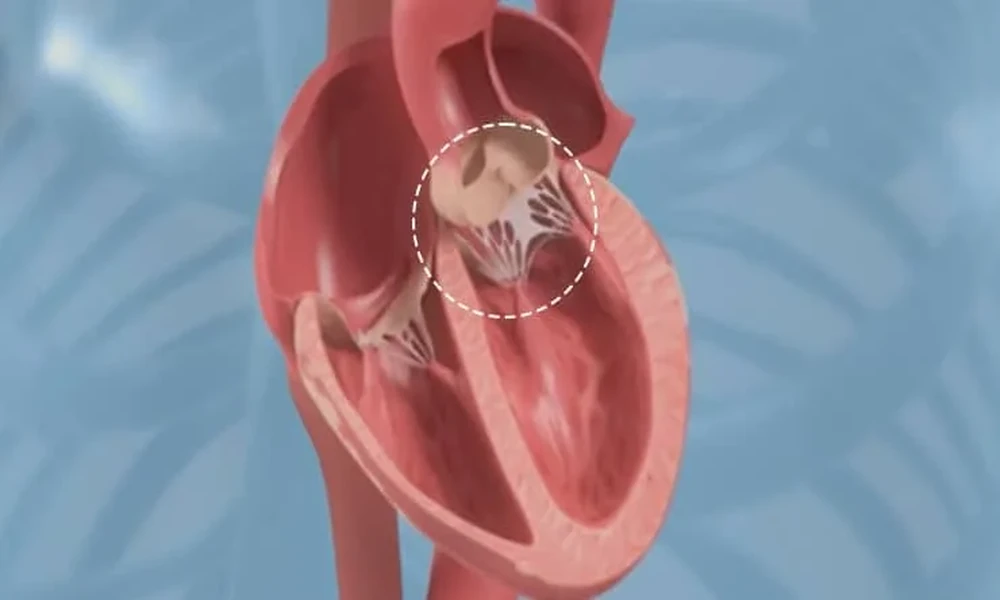
Aortic stenosis happens when the aortic valve becomes narrow and does not open properly. This can reduce blood flow from the heart to the rest of the body. Medical guidance explains that severe aortic stenosis can become serious, especially when symptoms such as chest pain, fainting or breathlessness appear. Read the medical overview here: Cleveland Clinic overview on aortic stenosis.
The heart has four valves. These valves keep blood moving in the right direction. The aortic valve is one of the most important because it controls blood flow from the heart to the main artery of the body.
When this valve becomes narrow, the heart must work harder. In the early stage, a person may not feel anything. This is why aortic stenosis is sometimes found during a routine checkup when the doctor hears a heart murmur.
Symptoms may appear slowly. A person may feel breathless while walking, tired during normal work, dizzy, or uncomfortable in the chest. Some people may faint during activity. These symptoms need medical assessment.
Aortic stenosis can happen because of ageing, calcium build-up, a valve problem from birth, or past rheumatic fever. Older adults are more likely to develop calcium-related valve narrowing.
Diagnosis usually needs an echocardiogram. This is an ultrasound test of the heart. It shows how narrow the valve is, how well the heart is pumping, and whether treatment is needed.
Treatment depends on severity and symptoms. Mild disease may need regular follow-up. Severe disease may need valve replacement. Some patients may be considered for open-heart surgery, while others may be considered for catheter-based treatment such as TAVI.
For readers who want to understand catheter-based valve care, Heart Valve Experts provides information on TAVI treatment. This should be discussed with a qualified cardiologist before making decisions.
Aortic stenosis is not something to self-diagnose. Early evaluation helps doctors decide whether monitoring, medicines or a valve procedure is needed.
Medical note: Seek urgent help for chest pain, fainting, severe breathlessness, sudden weakness, or symptoms that appear during physical activity.