
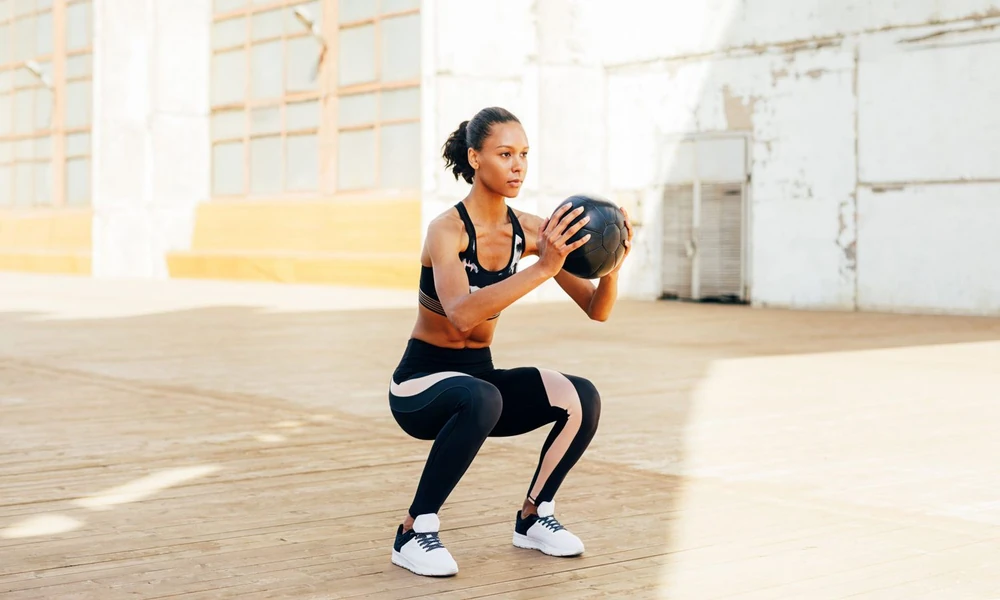
A balanced women’s workout plan supports everyday fitness by developing the same physical qualities daily life draws on, strength, stamina, and mobility, through varied rather than single focus training. The connection is direct. Ordinary days involve lifting, carrying, climbing, bending, and long hours of sustained activity, and a plan covering multiple types of movement builds capacity for all of these at once rather than just one.
Balance carries the weight here. women’s fitness research keeps circling back to the same finding: that one type of training on its own leaves holes. Endurance work gives stamina but not lifting strength. Lifting gives power but not lasting energy. A woman’s workout plan with genuine balance covers both, plus mobility, each part patching what the others miss.
Strength training for women deserves to be included in that mix as well. Muscle keeps bones loaded, holds joints steady, and pulls on resting metabolism as hormone levels change with age.
Fitness for everyday life
Everyday fitness is the capacity behind ordinary, unplanned activity, nothing to do with athletic performance. Functional fitness is the term researchers tend to use for it, and a handful of familiar situations cover most of what it means in practice.
- Load carrying – Groceries, luggage, a child on the hip, a work bag, all of it lands on grip, arms, back, and core, usually without warning.
- Level changes – Stairs, slopes, getting up off a floor or out of a low chair, leg and hip strength do this work.
- Sustained activity – A long working day, travel, hours of housework, stamina carry these more than any one burst of effort ever does.
- Reaching and bending – Overhead shelves, cleaning, gardening, none of it happens without mobile joints and a spine that holds steady.
Training transfers to tasks
A body’s adaptability to stress is specific to the demands placed on it, a principle exercise science has documented for decades. Training that mirrors daily movement patterns produces strength that transfers into those same patterns outside a gym.
It is why balance across training types counts more than intensity within any single one. Strength developed through resistance work shows up when something heavy needs lifting. Stamina developed through cardiovascular work shows up across a long afternoon. Mobility maintained through stretching shows up whenever a joint needs its full range. Each quality is trained separately but used together, often within the same ordinary hour of a day.
Relevance for women’s health
- Bone tells the story best. Among the few things known to slow the decline of bone mass after menopause, resistance training tops the list. Muscle runs on a similar clock. Somewhere around thirty, it begins a slow decline, and without a reason to stay, it goes.
- A varied plan spreads the physical load around, one system working while another recovers, and the research on this keeps landing in the same place. When trained moderately and with variety, people tend to report better energy throughout the day, better sleep, and better mood than either sedentary or overtrained people manage.
Every day life tests strength, stamina, mobility, and bone health quietly, and a balanced plan builds all four of those things. The gym is almost beside the point. What the balanced approach really offers is the capability in all the hours spent away from it, which is worth knowing whether a person currently exercises or not.