
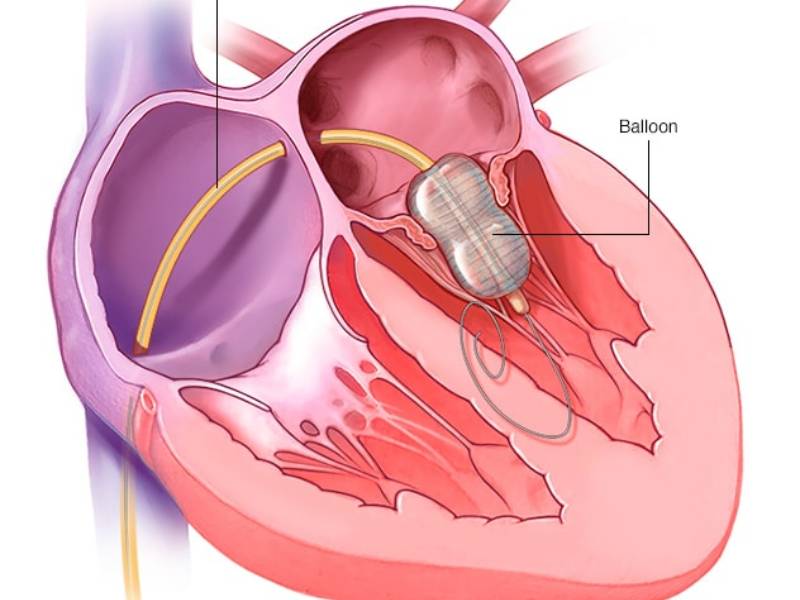
Balloon mitral valvuloplasty is a procedure used to treat selected patients with mitral stenosis. Mitral stenosis is a condition in which the mitral valve becomes narrow and does not open properly. This valve controls blood flow between the left atrium and the left ventricle, which are two chambers on the left side of the heart.
When the valve is narrowed, blood flow becomes restricted. This can increase pressure in the heart and lungs, leading to symptoms such as breathlessness, tiredness, palpitations, chest discomfort, and swelling in the feet. In suitable patients, balloon mitral valvuloplasty can help widen the narrowed valve and improve blood flow.
However, not every patient with mitral stenosis is a good candidate for this procedure. Doctors consider several important factors before recommending it.
The Severity of Mitral Stenosis
The first factor doctors consider is how narrow the mitral valve has become. Mild mitral stenosis may not require a procedure. In such cases, the patient may be advised regular follow-up, repeat echocardiograms, and medicines if needed.
Balloon mitral valvuloplasty is usually considered when the narrowing is significant, especially if the patient has symptoms. An echocardiogram helps measure the valve area and shows how blood is moving through the valve. It also helps the doctor understand whether pressure in the lungs has increased.
A patient with severe mitral stenosis and symptoms may be considered for the procedure if other conditions are also favorable.
Presence of Symptoms
Symptoms play an important role in treatment decisions. A patient may be more likely to need balloon mitral valvuloplasty if mitral stenosis is causing breathlessness, fatigue, reduced stamina, palpitations, or difficulty performing daily activities.
Some patients may not realize how much their activity has reduced. They may avoid stairs, walk slowly, or stop doing tasks that previously felt easy. During consultation, doctors often ask detailed questions about exercise capacity, sleep, swelling, chest discomfort, and episodes of fast heartbeat.
If symptoms are clearly related to mitral stenosis and the valve is suitable, balloon mitral valvuloplasty may be recommended.
Valve Anatomy
Valve anatomy is one of the most important factors. Balloon mitral valvuloplasty works best when the mitral valve leaflets are fused but still reasonably flexible. The balloon helps separate the fused parts of the valve and increases the valve opening.
If the valve is too stiff, thickened, calcified, or badly deformed, the procedure may not give good results. In some cases, it may even worsen leakage of the valve. Doctors assess the valve structure carefully through echocardiography.
They may look at leaflet movement, leaflet thickness, calcium deposits, and the condition of the supporting structures below the valve. These findings help decide whether the valve is suitable for balloon treatment.
Degree of Mitral Valve Leakage
Doctors also check whether the mitral valve is leaking. This leakage is called mitral regurgitation. A small amount of leakage may be acceptable in some cases, but significant leakage can make balloon mitral valvuloplasty unsuitable.
The reason is simple. The procedure opens the narrowed valve by stretching it. If the valve is already leaking badly, stretching it may make the leakage worse. In such situations, surgery may be a safer and more suitable option.
This is why echocardiography is important before the procedure. It helps doctors assess both narrowing and leakage.
Absence of Blood Clots in the Heart
Patients with mitral stenosis, especially those with atrial fibrillation, may have a higher risk of blood clots forming inside the left atrium. Atrial fibrillation is an irregular heart rhythm that can cause blood to move slowly in the upper chamber of the heart.
Before balloon mitral valvuloplasty, doctors need to make sure there is no clot inside the heart. If a clot is present, the procedure may increase the risk of stroke. In such cases, the doctor may prescribe blood thinner medicines and reassess the patient later.
A transesophageal echocardiogram may be advised when doctors need a clearer view of the left atrium and left atrial appendage, where clots can form.
Heart Rhythm and Atrial Fibrillation
Heart rhythm is another important consideration. Many patients with mitral stenosis develop atrial fibrillation. This does not always rule out balloon mitral valvuloplasty, but it does require careful planning.
If atrial fibrillation is present, doctors may focus on heart rate control, blood clot prevention, and clot evaluation before the procedure. Blood thinners may be needed in selected patients. The decision depends on the patient’s risk factors and test results.
A patient with atrial fibrillation can still be a candidate if the valve anatomy is suitable and no clot is present.
Lung Pressure and Overall Heart Function
Mitral stenosis can increase pressure in the blood vessels of the lungs. This is called pulmonary hypertension. Balloon mitral valvuloplasty may help reduce this pressure in suitable patients by improving blood flow through the mitral valve.
Doctors also assess the pumping function of the heart and check whether other valves are affected. If there is severe disease in other valves, or if another heart problem needs treatment, balloon mitral valvuloplasty alone may not be enough.
A complete heart evaluation helps doctors decide whether catheter-based treatment is appropriate or whether surgery should be considered.
Special Situations Such as Pregnancy
Pregnancy increases the workload on the heart. A woman with mitral stenosis may become more breathless during pregnancy because the body’s blood volume increases. In selected pregnant patients with severe symptoms, balloon mitral valvuloplasty may be considered if medicines are not enough and the valve is suitable.
This decision requires careful coordination between the cardiologist, obstetrician, and patient. The timing, benefits, and risks must be discussed properly.
When a Patient May Not Be a Good Candidate
A patient may not be a good candidate for balloon mitral valvuloplasty if the valve is heavily calcified, severely leaking, or structurally unsuitable. The presence of a clot in the left atrium may also make the procedure unsafe unless it is treated and resolved.
Other reasons may include severe disease of other heart valves, the need for bypass surgery, or complex heart disease requiring surgical correction. In such cases, mitral valve repair or replacement may be discussed.
Conclusion
A good candidate for balloon mitral valvuloplasty is usually someone with significant mitral stenosis, symptoms, suitable valve anatomy, no major mitral valve leakage, and no blood clot in the heart. Doctors also consider heart rhythm, lung pressure, pregnancy status, other valve problems, and overall health.
The decision should always be based on a detailed evaluation rather than symptoms alone. For suitable patients, balloon mitral valvuloplasty can improve blood flow, reduce breathlessness, and help restore better daily functioning.